
SEO Services for Therapists: What They Include and Why They Work
Finding new clients is a challenge for many therapists today. The internet is full of information, and people searching for help often feel lost. So, how can a therapist stand out online? The answer is SEO services for therapists. With good SEO, therapists can reach people who truly need their help. This article explains everything therapists need to know about SEO services, why they matter, what to expect, and how to choose the right provider. If you want your therapy practice to grow, understanding SEO is not an option—it’s a must.
Why Therapists Need Seo Services
Many people now turn to Google before they pick up the phone. In fact, over 80% of clients search online to find mental health support. If your website does not appear on the first page of search results, it will be almost invisible. Good SEO helps therapists:
- Attract more local clients
- Build trust and credibility
- Compete with larger practices or directories
- Grow their reputation online
Without SEO, even the best therapist’s website may never be seen. SEO services are not just about ranking higher—they are about connecting with people who need your help.

*Therapists can reach more clients by investing in SEO strategies. *
Many therapists underestimate how much people rely on digital searches to make decisions. Today, even word-of-mouth recommendations are often followed by a quick Google search to check reviews or read about a therapist’s approach. Without a strong online presence, you may lose out to competitors—even if you are highly skilled in your field.
One non-obvious benefit of SEO is that it helps you reach people at the exact moment they are searching for help. Unlike traditional ads, which might interrupt someone at the wrong time, SEO puts you in front of clients who are already motivated and ready to act.
This means your website can act as a “silent salesperson,” working for you around the clock.
SEO also protects you from sudden changes in the market. If insurance panels or referral sources dry up, a strong online presence can keep your practice steady. In uncertain times, therapists with good SEO have more control over their client flow.
What Are Seo Services For Therapists?
SEO services for therapists are special strategies to improve a therapist’s online visibility. These services go beyond just keywords—they help therapists:
- Show up in local searches (like “therapist near me”)
- Get listed on Google Maps
- Write helpful blog posts
- Improve website speed and design
- Manage online reviews
- Track website visitors
SEO experts know how to use the right methods for therapy practices, not just any business. This is important because the language, privacy, and trust factors are unique in mental health.
Main Components Of Seo For Therapists
- Keyword Research: Finding words people use to search for therapy
- On-Page Optimization: Improving web pages for search engines and people
- Local SEO: Showing up in your city or neighborhood
- Content Creation: Writing blogs, articles, and resources
- Technical SEO: Fixing website speed, errors, and mobile design
- Reputation Management: Managing reviews and mentions online
- Analytics and Reporting: Tracking progress and results
Each part works together to help more people find and trust your therapy practice.
Let’s look closer at what these components mean in the context of therapy:
- Keyword Research is more than picking “therapist near me.” It includes understanding how people describe their struggles—like “help for panic attacks” or “support after divorce.” Good SEO services will find keywords that match your services and your clients’ language.
- On-Page Optimization goes beyond adding keywords. It means making sure your website is easy to navigate, that every page has clear headings, and that your contact information is visible. For therapists, it’s important to show empathy and professionalism in your page titles and descriptions.
- Local SEO is crucial. Many clients want someone close to home or work. SEO services will help you appear in “map packs” and local searches by using your address, local landmarks, and zip codes.
- Content Creation must be sensitive and helpful. Instead of hard-selling, therapists’ blogs and resources should educate, support, and build trust. This can include blog posts, guides to therapy types, or answers to common questions.
- Technical SEO often gets ignored but is vital. Even a beautiful website can struggle if it loads slowly or is not secure. Therapists also need to make sure their websites protect client privacy with SSL certificates and secure forms.
- Reputation Management means more than just getting reviews. Therapists need to handle sensitive feedback, respond carefully to criticism, and encourage satisfied clients to share their experiences (without breaking confidentiality).
- Analytics and Reporting help you see what’s working. For example, are people reading your blog about coping with anxiety, or do they leave quickly? Tracking this helps you create better content and attract more clients.
A good SEO service for therapists addresses all these areas, making your online presence strong, ethical, and effective.
How Seo Helps Therapists Attract Clients
When someone feels anxious, depressed, or stressed, they often search online for answers. If your website appears at the top, you become their first choice. Here’s how SEO brings clients to your practice:
- Local search: When someone types “therapist in [your city],” SEO puts you on the map.
- Answering questions: Blogs and FAQs help answer common mental health questions, building trust.
- Positive reviews: Good SEO encourages happy clients to leave reviews, attracting others.
- Easy contact: SEO-optimized websites make it simple to call, email, or book online.
People are more likely to choose therapists who appear professional and knowledgeable online. SEO helps you show your best self to the world.
Let’s break down how this works in real life. Imagine a potential client named Sarah. She feels overwhelmed by stress at work and wonders if therapy could help. She searches “stress management therapist near me. ” If your website appears in the top results, with a clear description and positive reviews, Sarah is much more likely to reach out.
Your blog posts can answer questions Sarah might have, like “What happens in the first therapy session? ” or “How do I know if I need counseling? ” Each helpful answer builds trust—even before Sarah meets you.
SEO also increases the chances that clients will find you through different channels. For example, someone might find your blog on anxiety, then visit your “Contact” page. Or a friend might send them a link to your website after reading a helpful article.
The more useful, findable content you have, the more ways clients can connect with you.
Non-obvious insight: Many therapists don’t realize that SEO also helps build relationships with other professionals. Doctors, teachers, or HR managers searching for local therapists may find your site and refer clients to you.
Finally, SEO brings in clients who are the right fit. When you optimize for your specialties—like “couples counseling” or “child therapist”—you attract people who truly need your services, not just anyone browsing.
Key Seo Strategies Tailored For Therapists
SEO is not the same for every business. Therapists have special needs—confidentiality, trust, and local competition. Here are the most important strategies:
1. Local Seo
- Claim and optimize your Google Business Profile
- Add your practice to local directories (Psychology Today, TherapyDen)
- Use city and neighborhood names on your website
- Collect and respond to reviews
Therapists should pay extra attention to their Google Business Profile. This is often the first thing people see when searching on their phone or Google Maps. Make sure your hours, address, and services are always up-to-date. Adding real photos of your office helps clients feel comfortable before their first visit.
When you add your practice to directories, keep your information consistent. For example, always use the same phone number and address. This helps Google trust that your business is real and local.
2. Keyword Research For Therapy
- Use tools like Google Keyword Planner
- Target phrases like “anxiety therapist [city]” or “couples counseling near me”
- Avoid medical jargon—use words people actually search
SEO experts often find that clients don’t use clinical terms. For example, instead of “cognitive behavioral therapy,” they might search for “help with negative thoughts. ” It’s important to use the language your clients use, not just professional terms.
Another tip: Look for questions people ask on forums or social media. Phrases like “Is therapy confidential?” or “How long does therapy last?” can be turned into blog topics and page titles.
3. Quality Content Creation
- Write blog posts about anxiety, depression, relationships, and self-care
- Offer downloadable resources (worksheets, guides)
- Use real-life examples and stories (without breaking confidentiality)
Good content answers real questions and shows your expertise. For example, a blog post titled “How to Support a Teen with Anxiety” can attract parents searching for help. Worksheets or checklists—like “Signs of Burnout”—give readers something valuable and keep them coming back.
If you share stories, always change details to protect privacy. You might write, “A client (let’s call her ‘M’) once struggled with…” to give relatable examples without revealing identities.
4. Website Optimization
- Fast loading times
- Mobile-friendly design
- Clear calls to action (buttons to book or contact)
- Secure (HTTPS) and private
Nearly half of all website traffic comes from mobile devices. If your site isn’t mobile-friendly, you’ll lose potential clients. Make sure buttons are easy to tap, text is readable, and forms are simple.
Calls to action matter. Don’t just say “Contact. ” Instead, use buttons like “Book Your First Session” or “Schedule a Free Consultation. ” These encourage action and make it clear what the next step is.
Make sure your site uses HTTPS (the padlock in the address bar). This protects information and reassures clients that their privacy matters.
5. Reputation Management
- Ask happy clients for Google reviews (while respecting privacy)
- Respond politely to both positive and negative reviews
- Monitor your online reputation
Some therapists worry that asking for reviews feels awkward. The best way is to gently remind clients that feedback helps others find help, and make it easy by sending a link. Never pressure clients, and always respect their decision.
Responding to reviews shows you care. Thank clients for positive feedback and, if you get a negative review, respond kindly and offer to discuss concerns privately.
6. Technical Seo
- Fix broken links
- Use simple, clean URLs
- Add meta tags and descriptions to every page
- Use schema markup for therapists
Technical SEO is often overlooked but makes a big difference. For example, a broken link can frustrate visitors and hurt your rankings. Schema markup is special code that helps Google understand your practice—like your location, services, and hours.
7. Tracking And Analytics
- Install Google Analytics
- Track which pages get the most visits
- Adjust strategy based on what works
Analytics show you which topics attract clients, which pages lead to calls, and where people drop off. This helps you improve your website over time.
Non-obvious insight: Track which blog posts or pages lead to contact form submissions. Sometimes, a post you wrote months ago suddenly brings in clients. Regularly review your analytics to spot these trends.
Comparing Seo Services For Therapists
Not all SEO services are the same. Some focus on quick results but ignore quality, while others use ethical, long-term strategies. Here’s a comparison of what you might find:
| SEO Service Type | What It Includes | Typical Cost (per month) | Best For |
|---|---|---|---|
| Basic SEO Package | Keyword research, on-page fixes, local listing setup | $200–$600 | Solo practitioners starting out |
| Comprehensive SEO | All basics plus monthly blogs, technical fixes, ongoing monitoring | $700–$2,000 | Growing practices, group clinics |
| One-Time SEO Audit | Website review, action plan, technical analysis | $500–$1,500 | Practices wanting to fix problems themselves |
| Reputation Management | Review monitoring, response strategy, listings clean-up | $150–$500 | Therapists with many online reviews |
Choosing the right package depends on your goals, budget, and how much you want to be involved.
Some SEO providers offer “cookie-cutter” plans that may work for restaurants or shops but miss what’s unique about therapy. For example, a basic package may improve your rankings but do nothing for your reputation or blog content. Comprehensive SEO includes ongoing content creation and technical support, which is ideal for practices in competitive areas or those wanting steady growth.
A one-time SEO audit is a great option for therapists who want to manage things themselves but need expert guidance on what to fix. Reputation management can be added if your practice gets a lot of online attention—either positive or negative.
Non-obvious insight: Some agencies bundle SEO with website hosting or design. While this can be convenient, make sure you still own your website and content if you switch providers in the future.
Steps To Start Seo For Your Therapy Practice
Getting started with SEO can feel overwhelming. But you don’t need to do everything at once. Here is a step-by-step approach:
- Assess your current website: Is it easy to use? Does it load quickly? Is it mobile-friendly?
- Define your ideal client: Who are you trying to reach? What problems do they search for?
- Claim your Google Business Profile: This is free and boosts local searches.
- List on directories: Add your practice to trusted therapy directories.
- Write helpful content: Start with one or two blog posts a month.
- Ask for reviews: Gently ask happy clients to leave a review.
- Track your progress: Use Google Analytics to see what’s working.
Even small steps can make a big difference over time.

*Claiming your Google Business Profile is one of the fastest ways to boost local SEO. *
Let’s give more detail for each step:
- When assessing your website, ask a friend or family member to try finding information. Is your phone number easy to find? Does the site look good on a smartphone? Even small improvements—like bigger text or a clearer “Contact” button—can help.
- Defining your ideal client means thinking about who you enjoy working with and who benefits most from your services. Are you best with teens, couples, or adults with anxiety? Tailor your content to speak directly to them.
- When listing in directories, check for any existing listings you didn’t create. Sometimes, old or incorrect info is already online. Claim and update these listings so everything matches.
- Writing content doesn’t have to be hard. Start by answering the three most common questions clients ask in your first session. Each answer can be a short blog post.
- For reviews, you can add a short note to your email signature: “If you found our work helpful, a review on Google helps others find support.” Remember to follow your board’s guidelines for requesting reviews.
- Finally, tracking progress doesn’t mean checking every day. Once a month, look at your analytics and see what’s growing. This helps you celebrate wins and spot places to improve.
On-page Seo For Therapy Websites
On-page SEO means improving each page of your website. Here’s what matters:
- Use clear titles like “Anxiety Therapy in [Your City]”
- Write simple, helpful descriptions for every page
- Break up text with headings, images, and bullet points
- Link to other helpful pages on your own site
Example Of A Good Therapy Page Title
“Depression Counseling in Chicago – Compassionate, Confidential Support”
This title uses the service, location, and reassuring words.
Optimizing Images
- Use real, welcoming photos (not just stock images)
- Add “alt text” to each image, describing what’s in the photo
- Keep file sizes small for fast loading
Images are often ignored, but they matter for SEO and client trust. Real photos of your office, waiting room, or even a friendly welcome sign can help clients feel at ease. Alt text is also important for accessibility—describing images helps people using screen readers and gives Google more information about your site.
Internal Linking
Link related blog posts and service pages together. For example, a page about “Anxiety Therapy” might link to a blog post about “Coping with Panic Attacks. ”
Internal links help search engines understand your site structure, but they also help clients find more information. If someone is reading about depression therapy, a link to “How to Choose a Therapist” can guide them to the next step.
Non-obvious insight: Use a “related articles” section at the end of each blog post. This keeps visitors on your site longer, which Google sees as a sign of quality.
Another tip: Make sure every page has a clear call to action. For example, at the end of a service page, invite readers to “Schedule a Free Consultation” or “Read More About Our Approach.”
Off-page Seo: Building Trust Beyond Your Website
Off-page SEO includes everything that happens outside your website. This builds authority and helps search engines trust you.
Key Off-page Seo Actions
- Get listed in trusted therapy directories
- Encourage clients to leave reviews on Google
- Network with other local therapists for referral links
- Write guest articles for local news or mental health blogs
The more your name appears in trusted places, the higher your site will rank.
Let’s explain why each off-page action matters:
- Directories are important because they often rank high in search results. Being listed on Psychology Today, GoodTherapy, or TherapyDen not only brings you direct traffic but also gives Google “proof” that your practice is real.
- Reviews are one of the strongest trust signals. Even a few positive reviews can make a big difference. Some directories let clients leave reviews too, so check those regularly.
- Networking with other therapists can lead to backlink opportunities. For example, if you write a guest post for a local mental health clinic, you get a link back to your site—this is a strong signal for Google.
- Guest articles in local news or community blogs help you reach new audiences and show you are an active member of the mental health community.
Non-obvious insight: If you give talks at schools, libraries, or community centers, ask them to link to your website on their event page. This builds both credibility and SEO value.
The Role Of Content Marketing For Therapists
Content is king in SEO. Helpful, honest, and well-written content brings people to your site and shows that you care.
Types Of Content That Work
- Blog posts on mental health topics
- FAQs about therapy and what to expect
- Self-help guides and worksheets
- Videos or podcasts explaining therapy methods
Content marketing is not just about writing. Videos, audio, and even simple infographics can help people understand what you offer. For example, a short video about “What to Expect in Your First Therapy Session” can calm nerves and help people decide to reach out.
How Often Should Therapists Post Content?
Aim for at least one new piece of content each month. Consistency matters more than quantity.
If you can post more often, great—but don’t sacrifice quality. One well-written article is better than five rushed posts.
Non-obvious Content Tips
- Answer real client questions (anonymously)
- Share local mental health resources
- Use simple, conversational language, not clinical terms
Another non-obvious tip: Create content for different stages of the client journey. For example, some people are just learning about therapy, while others are comparing providers. Write both “What is Therapy?” guides and “How to Choose the Right Therapist” posts.
Also, consider updating older blog posts with new information. Google values fresh content, and updates can give old posts new life.
Local Seo: Standing Out In Your Community
Most therapy clients look for someone nearby. Local SEO helps you appear in Google Maps and “near me” searches.
Essentials For Local Seo
- Use your city and neighborhood name on every page
- Add your practice address, phone, and hours
- Collect and respond to local reviews
- Join local business groups online
Another useful step: Add directions or parking info to your website. Clients often search for “therapist near [landmark]” or want to know if parking is available.
Local Seo Mistakes To Avoid
- Using an old address or phone number
- Ignoring negative reviews
- Forgetting to update your business hours
Even small mistakes can hurt your rankings. If you move offices, update your address everywhere—on your website, Google Business Profile, directories, and social media.
Non-obvious insight: If your city has multiple neighborhoods, create separate pages for each (“Therapist in Midtown,” “Therapist near River Park”). This helps you show up in more searches.
Technical Seo For Therapy Websites
Technical SEO is about making your website easy for Google to read and rank.
Key Technical Seo Tasks
- Use HTTPS for security
- Make sure your site loads in under 3 seconds
- Fix broken links and missing pages
- Add a sitemap and robots.txt file
Speed and security matter more than most therapists realize. Clients looking for help may leave if your site loads slowly or shows a security warning. Technical SEO also protects your site from being penalized by search engines for errors.
How To Check Your Site’s Technical Health
Free tools like Google PageSpeed Insights and Screaming Frog can help you spot problems.
Another free tool, Google Search Console, can show you if Google finds errors on your site. If you’re not comfortable fixing technical issues, an SEO agency or web developer can help.
Non-obvious insight: Test your site on different devices and browsers. Sometimes, a page looks fine on your computer but breaks on a phone or tablet.
Seo For Group Practices Vs. Solo Therapists
Group practices and solo therapists have different needs. Here’s a comparison:
| Feature | Group Practice | Solo Therapist |
|---|---|---|
| Website Needs | Multiple staff bios, more services, locations | Personal branding, focused services |
| SEO Focus | Broad keywords, team expertise, multiple locations | Local keywords, unique approach, personal story |
| Content Strategy | Weekly blogs, team-written content | Monthly blog, personal voice |
| Budget | Higher, more complex needs | Lower, focused on essentials |
Group practices often need more advanced SEO, while solo therapists can see results with a smaller investment.
For group practices, a well-organized website is crucial. Each therapist should have a bio page optimized with their specialties and location. Group practices can target more keywords and cover a wider range of topics, but need clear navigation so visitors don’t feel lost.
Solo therapists benefit from a personal touch. Sharing your story, values, and approach helps you stand out. Because your site is smaller, focusing on a few high-impact keywords can bring quick results.
Non-obvious insight: Group practices should create separate Google Business Profiles for each location, if allowed. This multiplies your visibility in local searches.
Measuring Seo Success: What Therapists Should Track
SEO is not a one-time job. To know if your investment is paying off, you need to track results. Here are the most important metrics:
- Website traffic: Are more people visiting your site?
- Rankings: Are you showing up higher for important keywords?
- Phone calls and emails: Are people contacting you more?
- Review count and rating: Are you getting more positive reviews?
- Appointment bookings: Is your calendar filling up?
Non-obvious Insight
Don’t just track overall traffic. Check if local visitors are increasing, and if they are spending more time on your site. These are the people most likely to become clients.
Another tip: Monitor “bounce rate”—the percentage of visitors who leave after viewing one page. High bounce rates may mean your content isn’t answering their questions or your site is hard to navigate.
Also, ask new clients how they found you. Sometimes, a blog post or directory listing you forgot about brings in clients.
Common Mistakes Therapists Make With Seo
SEO can be confusing, and many therapists make the same errors. Here are pitfalls to avoid:
- Ignoring mobile users: Over 60% of therapy searches happen on mobile phones.
- Using technical jargon: Write in simple language clients understand.
- Neglecting local SEO: If your Google Business Profile is missing or outdated, you’ll miss local clients.
- Not updating the website: Old blogs and broken links hurt your rankings.
- Trying to rank for “therapist” only: Focus on specific problems like “child anxiety therapist in [city]”.
Knowing what not to do is just as important as knowing what works.
Another common mistake: Not having a clear privacy policy. Clients want to know their information is safe. Make sure your site explains how you protect privacy.
Some therapists also forget to track their results. Without data, you can’t see what’s working—or what needs to change.
Non-obvious insight: Avoid copying content from other websites, even if it sounds perfect. Google may penalize duplicate content, and your site won’t stand out.
How To Choose The Right Seo Service For Your Therapy Practice
With so many agencies out there, picking the right SEO service can feel overwhelming. Here’s how to make a smart choice:
1. Look For Experience In The Therapy Field
SEO for therapists is different from general businesses. Ask if they have helped other therapy practices before.
2. Ask For Clear Reporting
You should get monthly reports showing what was done and the results. Avoid services that don’t explain their work.
3. Avoid “guaranteed First Page” Promises
No one can guarantee the #1 spot on Google. Be wary of big promises.
4. Check Their Reputation
Read reviews and ask for references. A trustworthy agency will have happy clients in the therapy field.
5. Understand The Pricing
Cheapest is not always best. Ask what is included in the price, and compare with other services.
6. Make Sure They Follow Ethical Guidelines
Some SEO tactics can get you banned from Google. Make sure your agency uses white-hat (ethical) methods.
Non-obvious insight: Ask to see examples of their work, not just rankings. A good agency will show you before-and-after results, sample blog posts, and client testimonials.
Also, check if the agency provides training. Some agencies help you learn basic SEO, so you can keep things running smoothly if you ever decide to manage it yourself.
Diy Seo Tips For Therapists
Not ready to hire an agency? Many therapists start by doing SEO themselves. Here are steps you can take:
- Set up your Google Business Profile
- Write a blog post every month
- Ask happy clients for reviews
- Update your website with clear service pages
- Share your articles on social media
- Monitor your website with Google Analytics
You don’t need to be a tech expert. Many SEO basics are free or low-cost.
A practical DIY tip: Use free tools like Google’s Keyword Planner or Ubersuggest to find what people are searching. Even small tweaks—like changing your page title from “Home” to “Anxiety Counseling in [Your City]”—can bring more traffic.
If you’re short on time, focus on your homepage, contact page, and one or two key services. Make sure these pages clearly explain what you offer, who you help, and how to get in touch.
Non-obvious insight: Add a “Frequently Asked Questions” section to your site. This answers common concerns and adds valuable keywords naturally.
Seo Case Study: A Small Therapy Practice
Dr. Emily, a therapist in Austin, Texas, struggled to get new clients. Her website was simple, but buried on page 6 of Google. Here’s how SEO helped her:
- She claimed her Google Business Profile and added photos.
- Wrote three blog posts on “anxiety in teens.”
- Asked two happy clients to leave reviews.
- Added “Austin” to her website titles and descriptions.
- Fixed broken links and made her site mobile-friendly.
Within 4 months, Dr. Emily’s site appeared on page 1 for “teen anxiety therapist Austin. ” She now gets 5-7 new client calls every week. Her story shows that small changes can lead to big results.
Digging deeper, Dr. Emily also started answering common parent questions in her blogs, like “How do I talk to my teen about anxiety? ” By using real language and sharing tips, her posts became popular in local Facebook groups. She also joined a local therapists’ network, which sent referral traffic to her site.
Another non-obvious win: By adding a short video welcome message to her homepage, Dr. Emily made her site more personal. Clients said they felt like they “knew her” before the first session.
The Importance Of Mental Health Directories
Many clients use directories like Psychology Today to find therapists. Being listed helps your SEO by:
- Getting more local visitors
- Building backlinks to your website
- Boosting your reputation
But don’t rely only on directories. Your own website should be the main place where people learn about you.
Directories also help you show up in searches for “therapist near me. ” Many people trust these sites, so being listed increases your credibility. Update your directory profiles regularly—add new photos, update your bio, and include links to your website.
Non-obvious insight: Some directories allow you to post articles or answer questions. Doing this regularly can send even more visitors to your site.
How Much Do Seo Services For Therapists Cost?
Prices vary based on your needs and location. Solo therapists usually spend $300–$800 per month. Group practices may pay $1,000–$2,000 per month. One-time audits cost $500–$1,500.
Some agencies offer hourly consulting ($75–$200/hour), but ongoing packages usually work best for real growth.
Also, remember that SEO is an investment. Over time, it usually costs less than paying for ads or buying leads. Most therapists find that one new client a month covers their SEO costs.
Non-obvious insight: Ask about contract length. Some agencies lock you in for 6 or 12 months. Others offer month-to-month plans, which can be less risky for new practices.
How Long Does Seo Take To Work?
SEO is not instant. Most therapists see results in 3–6 months. For new websites, it may take longer. The more competitive your city, the more time it can take.
Pro Tip
Don’t stop after a few months if you don’t see big changes. SEO builds over time, and results often snowball as your site gains trust.
SEO is like planting seeds. You may not see results right away, but with patience and regular updates, your site will grow. If you’re in a small town, you may see results faster. In big cities, it may take longer—but the payoff is worth it.
Non-obvious insight: Even after you stop active SEO, your content can keep bringing in clients for years. An old blog post that answers a common question can keep appearing in searches and attracting new visitors.
Advanced Seo Tactics For Therapists
Once you have the basics, try these more advanced ideas:
- Create video content: Google loves video, and clients connect with your face and voice.
- Host webinars: Offer free online events and invite people from your community.
- Use schema markup: This special code helps Google understand your services.
- Build partnerships: Exchange links or guest posts with local clinics or nonprofits.
- Track conversions: Set up “goals” in Google Analytics to track phone calls and bookings.
Advanced tactics can set you apart from the competition. For example, creating a YouTube channel with short mental health tips can help you appear in both Google and YouTube searches. Hosting webinars or Q&A sessions shows you are active in the community.
Schema markup is often missed by beginners, but it’s powerful. Ask your web developer or SEO agency to add schema for “MedicalBusiness” or “Person” (for solo therapists). This helps Google show your reviews, services, and hours directly in search results.
Non-obvious insight: Use Google My Business posts to share updates or blog links. These appear directly in your profile and can increase clicks.
Seo And Privacy: What Therapists Must Know
As a therapist, privacy is essential. Here’s how to stay safe:
- Never share client names or details in content or reviews
- Use secure contact forms (encrypted)
- Make sure your site has a privacy policy
SEO can bring in more clients, but always protect their confidentiality.
If you use testimonials, get written permission and change all details. Some therapists use general feedback like “Working with Dr. Smith changed my life” without any identifying information.
Make sure your website explains how client data is handled. For example, “All messages sent through our contact form are encrypted and private. ”
Non-obvious insight: Review your website’s cookies and tracking. Some analytics tools collect more information than you need. Only use what is necessary, and inform visitors in your privacy policy.
Working With An Seo Agency: What To Expect
When you hire an SEO agency, here’s what usually happens:
- Discovery call: They learn about your practice and goals.
- Website audit: They check your site for problems and opportunities.
- Keyword research: Find the best words to target.
- Action plan: A list of changes and new content ideas.
- Monthly work: Regular updates, new blogs, and reports.
A good agency will explain everything in plain English, not technical jargon.
You should be able to ask questions at any time. If you don’t understand a recommendation, ask for an example. The best agencies teach you as they work—so you always know what’s happening.
Non-obvious insight: Ask for a “roadmap” showing what will happen in the first 90 days. This helps you track progress and stay involved.
The Link Between Seo And Client Trust
When people search for help, they want to feel safe. Good SEO does more than bring traffic—it builds trust:
- A well-designed, professional website reassures visitors
- Helpful content answers real questions
- Positive reviews show you are caring and effective
Clients are more likely to book with therapists who look trustworthy online.
A welcoming website with clear photos, easy navigation, and honest answers to common questions makes a huge difference. People may visit several therapist sites before choosing one. If your site feels personal and professional, you’ll win their trust.
Non-obvious insight: Show your credentials, memberships, and years of experience. These small details help clients feel confident in your expertise.
Seo And Social Media: Better Together
SEO and social media work hand-in-hand. Sharing your blog posts on Facebook, Instagram, or LinkedIn can:
- Drive more traffic to your website
- Help your posts rank higher in search
- Build your reputation in the community
You don’t need to be everywhere. Focus on one or two platforms where your clients spend time.

*Sharing content on social media boosts your SEO and connects you with more people. *
Social media also lets you interact with your community in real time. For example, you can answer questions, share mental health tips, or highlight local events. Every share and comment increases your visibility and can lead to new backlinks.
Non-obvious insight: When local organizations tag your practice in posts or link to your site, this strengthens both your social presence and your SEO.
Should You Hire A Specialist Seo Agency?
Some agencies focus only on therapists and mental health professionals. The benefits of working with a specialist include:
- Understanding of therapy-specific language and privacy needs
- Experience with common therapy services and client questions
- Knowledge of trusted directories and ethical advertising rules
If you want the best results, consider agencies with a track record in the mental health field.
Specialist agencies often know how to write sensitive, helpful content and avoid the mistakes general SEO firms make (like using aggressive sales language or ignoring privacy rules).
Non-obvious insight: Ask if the agency is familiar with HIPAA or other privacy laws in your region. This is essential for therapists.
Ethical Marketing For Therapists
Therapists must follow rules set by boards and associations. Make sure your SEO:
- Does not promise “cures” or guarantee results
- Respects client privacy at all times
- Avoids misleading or aggressive language
Check your local licensing board for advertising rules.
Ethical SEO means being honest about what you offer. For example, instead of saying “We guarantee you will overcome depression,” write “We help clients manage symptoms and improve well-being. ”
If you work with children, be especially careful with testimonials and images. Always get parental consent and use non-identifying photos.
Non-obvious insight: Some states require you to list your credentials and license number on your website. Check the rules to stay compliant.
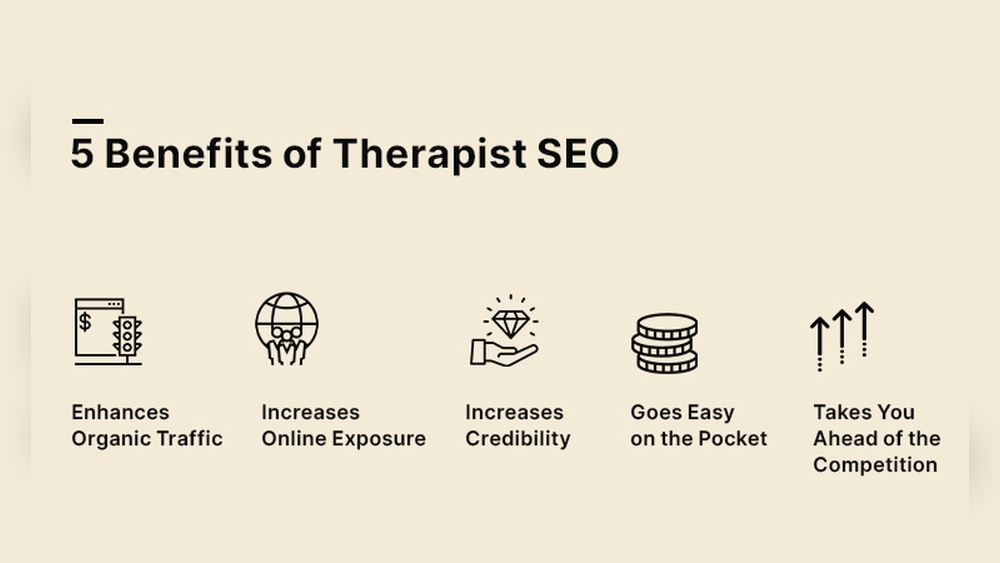
Key Benefits Of Investing In Seo For Therapists
Here’s a summary of the main advantages:
- More clients: Appear in front of people looking for help
- Better reputation: Positive reviews and helpful content build trust
- Cost-effective: Cheaper than ads in the long run
- Stronger community presence: Connect with local people
- Competitive edge: Stand out from other therapists
SEO is an investment, not a cost.
Over time, SEO builds a steady flow of clients. Unlike ads, which stop when you stop paying, SEO keeps working month after month.
Non-obvious insight: SEO also helps you launch new services—like online therapy or workshops—by attracting people searching for those options.
Signs You Need Seo Services Now
How do you know if it’s time to invest in SEO?
- Your website is not getting visitors
- You are not showing up in local searches
- Competitors appear above you on Google
- You rely only on word-of-mouth referrals
- You want to grow your practice or add new services
If any of these are true, SEO services can help you reach your goals.
Another sign: If you’re getting the wrong kind of inquiries (people outside your specialty or location), your SEO needs adjustment.
Future Trends: SEO for Therapists in 2026 and Beyond
SEO keeps changing. Here are trends therapists should watch:
- Voice search: More people use Siri and Alexa to find therapists (“Who is a therapist near me?”)
- Video content: Short videos about your services or mental health tips
- Mobile-first: Google now ranks mobile-friendly sites higher
- AI tools: Chatbots and virtual assistants for quick replies
Staying up to date keeps your practice ahead of the competition.
Another trend: “Zero-click searches.” Sometimes, Google answers a question right on the search page. To adapt, write clear, direct answers in your blog posts and FAQs.
Non-obvious insight: Accessibility matters. Google is giving more credit to sites that are easy to use for people with disabilities. Add alt text, use clear fonts, and keep your site easy to navigate.
What To Avoid When Hiring Seo Services
Not all SEO providers are trustworthy. Avoid:
- Agencies that use spammy backlinks
- Promises of instant results
- Lack of clear reporting
- No experience in the therapy field
Choose partners who value your reputation as much as you do.
Watch out for “black-hat” tactics like buying fake reviews or stuffing keywords. These can hurt your site and even get you banned from search engines.
Non-obvious insight: If an agency won’t let you keep your website or content if you leave, look elsewhere. You should always own your online presence.
Example Seo Plan For A New Therapy Practice
Here’s what an SEO plan might look like for a therapist just starting out:
- Build a mobile-friendly website with clear service pages
- Set up Google Business Profile and local directories
- Write two blog posts on common client problems
- Collect first 3–5 Google reviews
- Monitor website traffic and leads monthly
- Adjust content based on what people search for
This plan covers the basics and builds a strong foundation.
After a few months, review your progress. If you’re seeing more calls and emails, keep going. If not, consider hiring help or expanding your content.
Non-obvious insight: Collaborate with other local businesses—like yoga studios or nutritionists—for guest posts or workshops. These partnerships can boost your SEO and your reputation.
Frequently Asked Questions
What Is The Most Important Part Of Seo For Therapists?
The most important part is local SEO. Most clients search for therapists near their home or work. Showing up in Google Maps and local search results brings you clients who are ready to book.
How Long Does It Take For Seo To Show Results For Therapists?
Most therapists see some results in 3 to 6 months. It can be faster if your competition is low, or longer in big cities. SEO is a long-term investment but brings steady growth over time.
Can I Do Seo Myself Or Do I Need To Hire A Professional?
You can start with basic SEO—like writing blogs, setting up your Google Business Profile, and asking for reviews. But for best results, especially in competitive areas, an SEO professional or agency is a good investment.
Is Paying For Ads Better Than Seo For Therapists?
Ads can bring quick results, but they stop when you stop paying. SEO brings long-term, free traffic. Many successful therapists use both—SEO for steady growth, and ads for busy periods.
What If I Work With Clients Online Or Across Different States?
Online therapists should focus on national keywords, but also target the biggest cities where they are licensed. Include “online therapy” and state names in your content and directory listings.
For more details about SEO best practices, you can check Moz’s SEO Guide.
Final Thoughts
SEO services for therapists are not just about getting to the top of Google. They are about helping people find the support they need. With the right strategies, you can grow your practice, build trust, and make a difference in your community.
Whether you do it yourself or hire a specialist, investing in SEO is one of the best ways to reach more clients and help more lives.
By staying ethical, focusing on your clients’ needs, and keeping up with new trends, you can turn your website into a powerful tool for positive change. Remember: every person searching for help online is someone you could support. With strong SEO, you make it easier for them to find you, trust you, and take the first step toward healing.
Keep Reading
Want this done for you? See our local SEO services or request a free local SEO audit.